
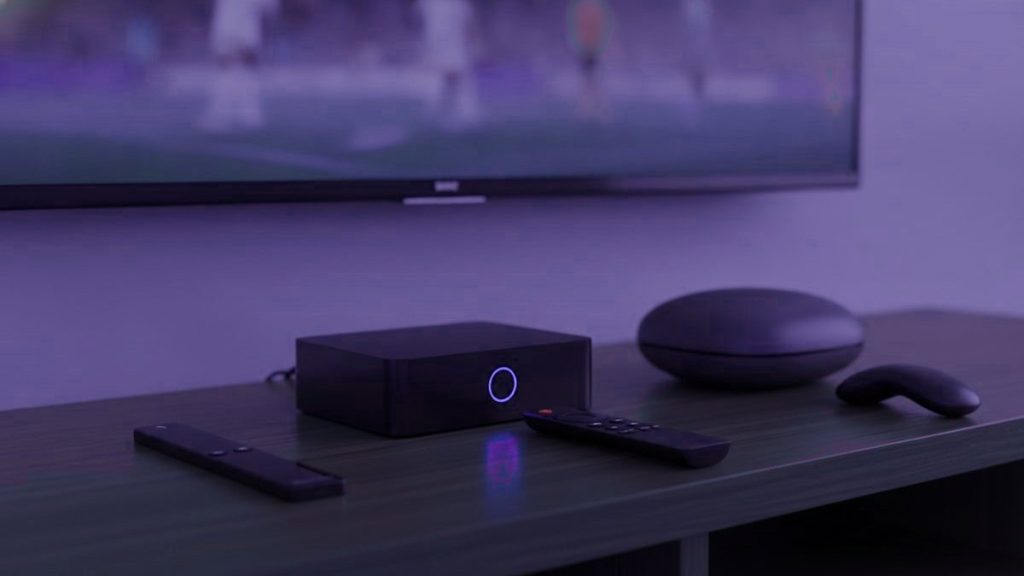
The best IPTV box is almost certainly one you already own. Any device currently running Netflix, Disney+, or a similar streaming platform will run an IPTV player without any additional hardware. Before buying anything, it is worth checking whether a device in the household already qualifies.
If you are buying new hardware, or if the existing device is too old or too slow for a good experience, this post covers the main options in 2026: what each one costs, what it handles well, and who each type of device is suited for. The focus is practical rather than exhaustive — the devices most people will actually consider, evaluated honestly.
Why the device matters less than you might expect
IPTV performance is bottlenecked more often by the provider’s server capacity and the home network than by the device itself. A midrange Fire TV Stick delivers the same stream quality as an Nvidia Shield Pro when both are receiving the same stable feed. The Shield Pro handles buffering recovery better and decodes 4K HDR more efficiently — but if the stream is solid, both devices produce the same image on the television.
The device matters at the edges: when decoding very high bitrate 4K streams, when processing a large EPG across 25,000 channels, and when handling a poor network connection. For standard viewing on a reliable subscription, a midrange device is indistinguishable from a premium one in daily use.
Amazon Fire TV Stick 4K Max
The Fire TV Stick 4K Max is the right first choice for most households starting with IPTV. It costs around $60, plugs directly into an HDMI port on any television, and runs IPTV Smarters Pro and TiViMate from the Amazon App Store or sideloaded. It handles 4K HDR, Dolby Vision, and Dolby Atmos. The remote includes buttons that navigate most IPTV player interfaces without needing to learn a new control scheme.
The practical advantage over the standard Stick: The Max model has a faster processor (MediaTek MT8696T versus the standard Stick’s MT8696) that makes channel switching and EPG loading noticeably quicker on a large channel list. The difference is small on a fast network; it is visible on a slower one or with a provider whose EPG is large.
Who it suits: Anyone who wants to add IPTV to an existing television without significant investment. Anyone who already uses Fire TV devices and is comfortable in the ecosystem. First-time IPTV users who want something that works with minimal setup.
Limitation: The Amazon ecosystem. Fire TV’s advertising and suggestions are present throughout the interface, and some IPTV apps must be sideloaded (installed outside the official store) on Fire TV. The sideloading process for TiViMate takes about five minutes once you know the steps.
Nvidia Shield TV Pro
The Nvidia Shield TV Pro is the most powerful Android TV box available in 2026, with a Tegra X1+ processor and 3 GB of RAM. It handles every video format and codec in use, including AV1, and its network performance is strong enough that the AI upscaling feature — which applies to IPTV streams as well as local media — produces a noticeably sharper image on 1080p content displayed on a 4K screen.
The practical advantage over cheaper Android boxes: The Shield runs Android TV natively, which means TiViMate and every other major IPTV player is available from the Google Play Store without sideloading. Google Assistant and Chromecast are built in. The device is genuinely fast — channel list loading, EPG rendering, and codec decoding all happen without the lag that cheaper boxes show under load.
Who it suits: Heavy users who want a single device that handles IPTV, local media playback, gaming (via GeForce Now), and everything else a media centre needs to do. Households with a 4K television who want to make the most of the upscaling on HD content. People who are annoyed by the limitations of cheaper devices and want to buy once.
Limitation: Around $200, which is three to four times the cost of a Fire TV Stick. The performance advantage over a $60 device is real but is not meaningful for most IPTV use cases.
Formuler Z11 Pro Max
The Formuler Z11 Pro Max is an Android set-top box built specifically around the IPTV use case. It ships with the MyTVOnline 5 player pre-installed and runs TiViMate and other Android-based players natively. The remote is designed around the IPTV viewing pattern: a guide button, a catch-up button, dedicated controls for the player rather than for a general-purpose Android interface.
The practical advantage: Out-of-the-box experience optimised for IPTV rather than for streaming or gaming. The MyTVOnline player that ships with it is functional immediately without any additional configuration. For users who found Fire TV’s ecosystem friction frustrating and want something that just works as a television box, the Formuler’s design approach is appealing.
Who it suits: Users coming from MAG set-top boxes who want a more powerful device with a familiar concept. Households where the television is used primarily for live channels and the Android box experience of the Nvidia Shield is unnecessary complexity.
Limitation: Around $130–$160 depending on the retailer. MyTVOnline 5 is good but TiViMate is better for most users, and TiViMate on a Fire TV Stick 4K Max at half the price is a comparable experience for standard IPTV use.
Apple TV 4K (3rd generation)
The Apple TV 4K handles 4K HDR, Dolby Vision, and Dolby Atmos with the most seamless integration in the Apple ecosystem. For households where iPhones and iPads are the main devices, the ability to handoff content, control via Siri, and share an Apple Account across devices is genuinely useful rather than a theoretical advantage.
IPTV on Apple TV requires using IPTV Smarters Pro or a compatible player from the App Store. TiViMate is not available on tvOS. The App Store’s curation means some players that are straightforwardly available on Android are harder to access on Apple TV.
Who it suits: All-Apple households who want their media centre to behave consistently with their other devices. People who already have an Apple TV and want to add IPTV rather than buy a second device.
Limitation: Around $130. Player options are more limited than on Android due to App Store restrictions. IPTV Smarters Pro works well, but the Android ecosystem gives you more flexibility in player choice.
MAG and Formuler set-top boxes
MAG boxes — produced by Infomir — are the original IPTV set-top box format. They run a Linux-based firmware called STB Emulator and are designed for exactly one purpose: displaying IPTV channels. They do not run Android apps, cannot be used for streaming platforms, and have no general-purpose computing functionality. They are the IPTV equivalent of a cable box, nothing more and nothing less.
The user experience on a MAG box is the most television-like of any option listed here. There is a remote control, a channel guide, and that is essentially the entire interface. For users who found Android-based players confusing and want something that behaves like a cable box, the MAG is the most direct answer.
Who it suits: Older users or low-tech households who find the Android TV interface confusing. Setups where a dedicated device for IPTV, separate from any smart TV or streaming stick, is preferred.
Limitation: Cannot run the Android-based players that most IPTV subscriptions are now built around. Provider support for the MAG portal format varies — not all providers maintain a compatible portal URL. Check with the provider before buying a MAG box specifically for use with their service.
Roku
Roku is the dominant streaming platform in the United States by active device count. It runs a proprietary OS rather than Android, which limits the IPTV player options — TiViMate is not available, and players that are easily sideloaded on Android require an alternative process on Roku.
IPTV Smarters Pro is available in the Roku Channel Store and is the practical choice for Roku users. The experience is functional. Roku itself is a strong platform for streaming services, and adding IPTV via Smarters to an existing Roku device adds the live channel grid without requiring new hardware.
Who it suits: Existing Roku users who want to add IPTV without replacing their current device.
Limitation: The IPTV player ecosystem on Roku is thinner than on Android or Fire TV. If IPTV is the primary use case, a Fire TV Stick or an Android box gives you better player selection for around the same cost.
The recommendation by use case
| Use case | Recommended device |
|---|---|
| Adding IPTV to an existing television, budget option | Amazon Fire TV Stick 4K Max |
| Primary media centre, all-in-one device | Nvidia Shield TV Pro |
| IPTV-first, television-like experience | Formuler Z11 Pro Max or MAG |
| All-Apple household | Apple TV 4K (existing device if already owned) |
| Using an existing Roku device | Roku (with IPTV Smarters Pro) |
| Smart TV without an additional device | Samsung/LG with Smart IPTV app |
The hierarchy is: check what you already own first, add a Fire TV Stick 4K Max if you need hardware and do not have strong reasons to go upmarket, and spend more only if a specific requirement — the Shield’s upscaling, the Formuler’s television-like interface, the Apple TV’s ecosystem integration — justifies the cost difference. IPTV performance is more about the subscription and the network than the device. A great subscription on a midrange device is consistently better than a poor subscription on premium hardware.
Frequently asked questions
What hardware do I need for IPTV?
Any device that currently runs Netflix will run an IPTV player. If you need to buy hardware, an Amazon Fire TV Stick 4K Max at around $60 handles 4K, runs TiViMate and Smarters, and requires minimal setup. If you want faster hardware or a television-like interface, step up to an Nvidia Shield TV Pro ($200) or a Formuler Z11 Pro Max ($130-$160).
Is the Nvidia Shield TV Pro worth it for IPTV?
If IPTV is your primary use case, probably not at $200. A Fire TV Stick 4K Max delivers the same stream quality at a third of the price when the feed is stable. The Shield earns its cost for media-centre use beyond IPTV — local playback, GeForce Now, Plex server — and its AI upscaling is genuinely useful on a 4K television receiving HD content.
Can I use my existing smart TV for IPTV?
Samsung and LG smart TVs made after 2016 run Smart IPTV directly from the app store. For other brands, attach a Fire TV Stick or Android box to an HDMI input. If the television already runs Netflix, it may also support IPTV apps directly — check the manufacturer's app store before buying a separate device.
What is a Formuler box and is it better than a Fire Stick?
A Formuler Z11 Pro Max is an Android TV box built specifically for IPTV use. It ships with the MyTVOnline 5 player pre-installed, has a remote with dedicated guide and catch-up buttons, and runs TiViMate natively. For daily IPTV viewing, the experience is more polished than a Fire Stick. For occasional use, a Fire Stick at a third of the price covers the same ground.
Does it matter which device I use for picture quality?
Less than you might expect. A Fire TV Stick 4K Max and an Nvidia Shield both receive the same stream from the provider. Where they differ is in how they decode very high bitrate 4K content, handle a poor buffer situation, and process a large EPG. On a stable feed, the picture quality is indistinguishable between midrange and premium devices.
Can I use a MAG box in 2026?
Yes, and MAG boxes still work well for users who want a television-like experience with no Android complexity. The limitation is that MAG boxes run a Linux firmware rather than Android, so they cannot use TiViMate, Smarters or other Android apps. Provider support for the MAG portal format varies — confirm that your provider maintains a compatible portal URL before buying a MAG box specifically for use with their service.
Work out what it would replace
Tell us what you currently pay for and we will say plainly which of it this covers and which of it it does not. Then take a 24-hour trial and check for yourself before cancelling a single thing.
Related articles
Best IPTV Apps in 2026: TiViMate vs Smarters vs Smart IPTV vs IBO Player
IPTV Smarters Pro, TiViMate, Smart IPTV, IBO Player — each one suits a different device and use case. The player is free;…
September 2, 2026How Much Does IPTV Cost in 2026? Real Prices From 5 Providers
An IPTV subscription costs $12–$25 per month. The number that matters is not the IPTV price in isolation but what it sits…
August 31, 2026Is IPTV Legal in the US? A Plain-English Guide for 2026
IPTV as a technology is entirely legal. The question that matters is whether a specific service holds the rights to what it…